
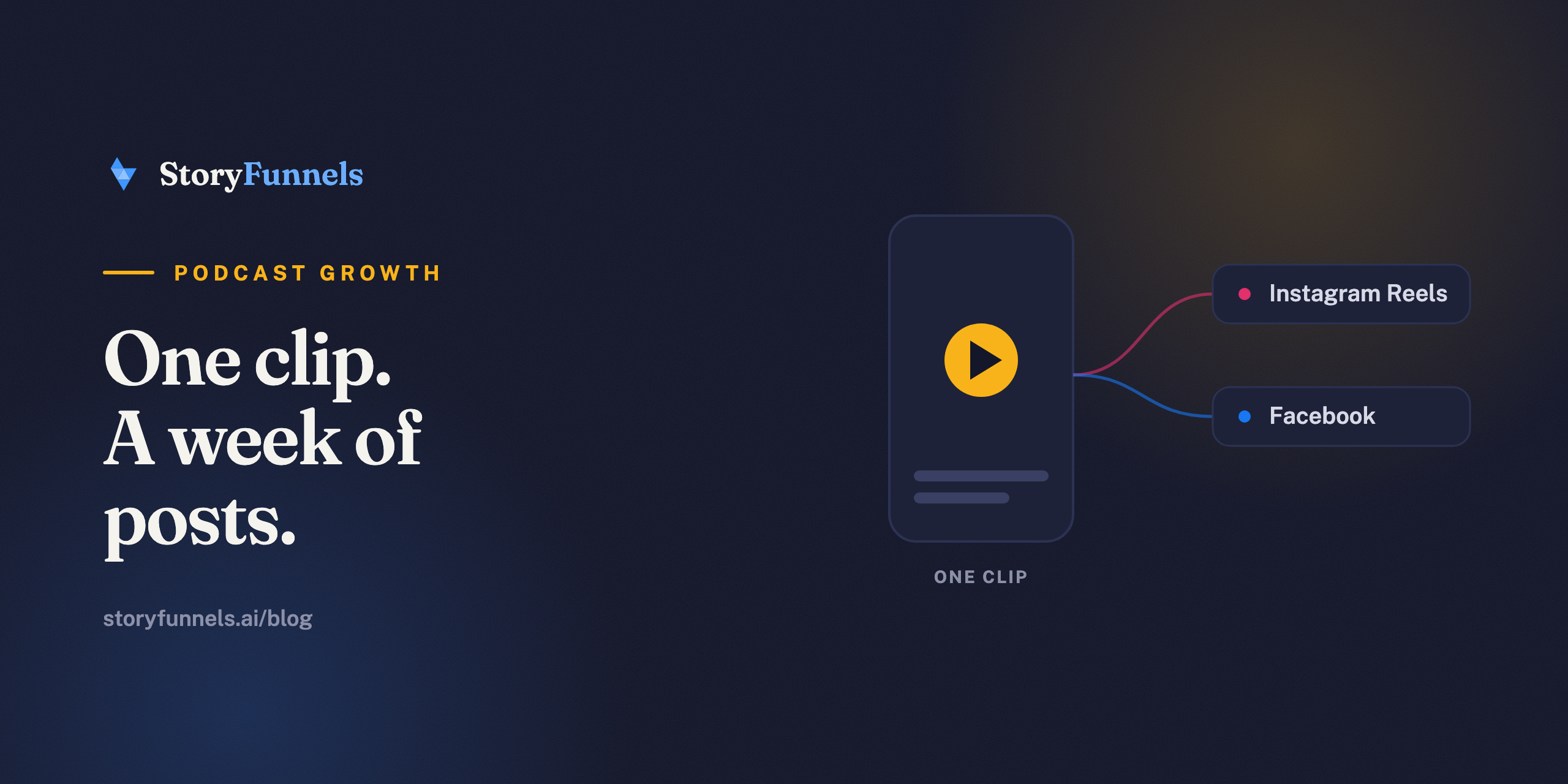
Nobody discovers a podcast inside a podcast app.
They discover it mid-scroll — a fifteen-second clip that makes them stop, a line that lands, a face mid-laugh. Spotify and Apple are where people listen to shows they already chose. Instagram and Facebook are where they choose. That’s the whole reason to be there.
And the engine that does the work is almost always the same thing: the clip.
Clips are the unit of discovery
A great episode is an hour long. Nobody’s first taste of you should be an hour long. The job of social is to hand a stranger the single best ninety seconds you’ve got — and let that do the convincing.
On Instagram, that’s a Reel: vertical, captioned, hooky in the first second. It’s the format the platform actively pushes to people who don’t follow you, which makes it the closest thing to free reach you’ll find. Make the clip well and Instagram becomes a discovery machine. Post a link and hope, and it stays silent.
What makes a clip actually travel
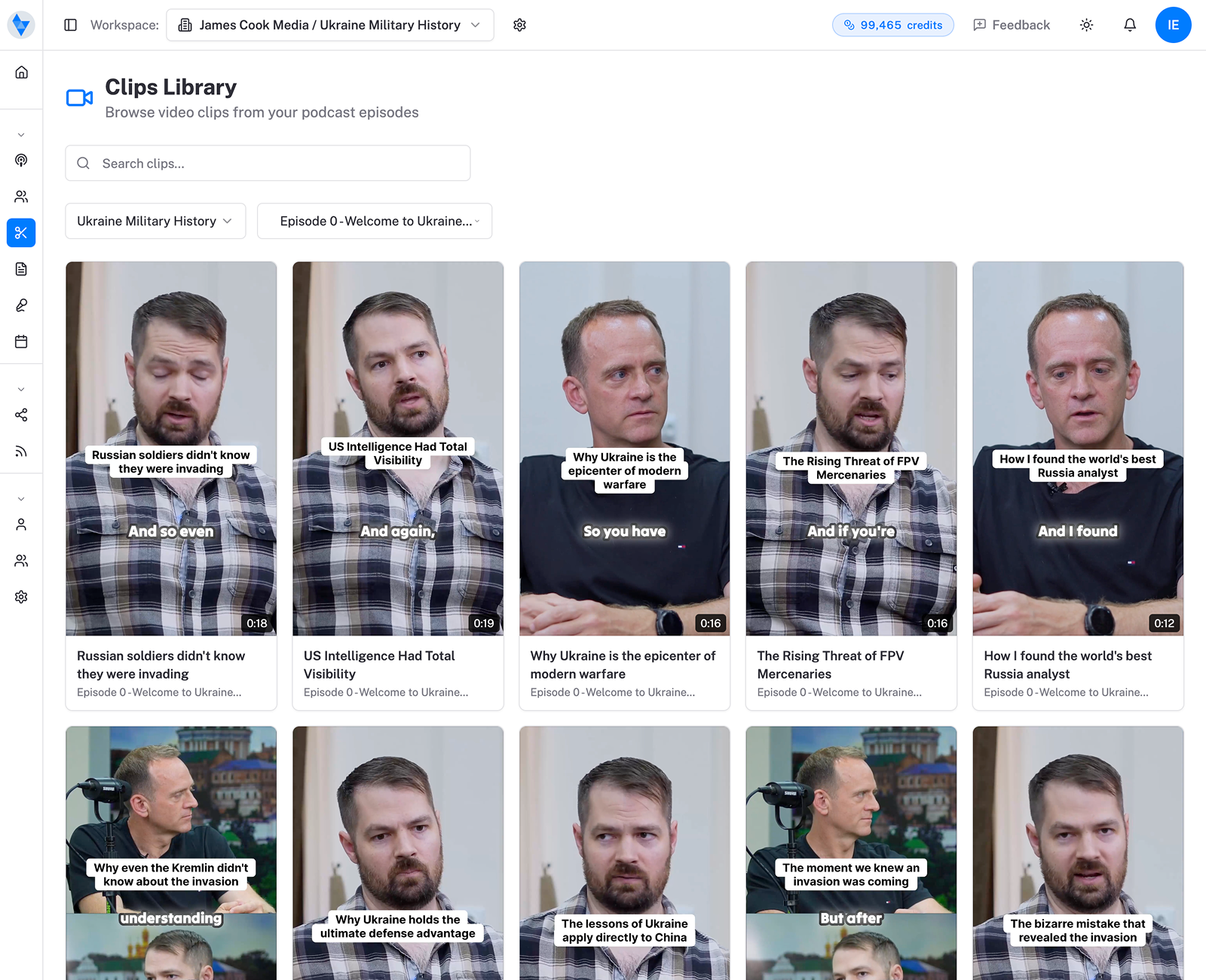
Most clips die in the first second. The good ones earn the next one, then the next.
- Open on the hook, not the hello. Cut the “hey guys, welcome back.” Start on the sharpest sentence — the claim, the question, the surprise.
- Caption everything. A huge share of feed video plays on mute. No captions, no message.
- One idea per clip. A clip that tries to say three things says none. Pick the single moment and trust it.
- Vertical, always. The whole screen is the canvas. A letterboxed landscape clip reads as “ad,” and people scroll past ads.
Get those four right and the platform does the distribution for you. That’s the trade: nail the craft, and reach is free.
One episode, a week of posts
Here’s the reframe that makes this sustainable: you’re not “making content for Instagram.” You’re harvesting what you already recorded.
One episode hands you, without writing anything new:
- Three to five Reels — the sharpest moments, each a standalone hook.
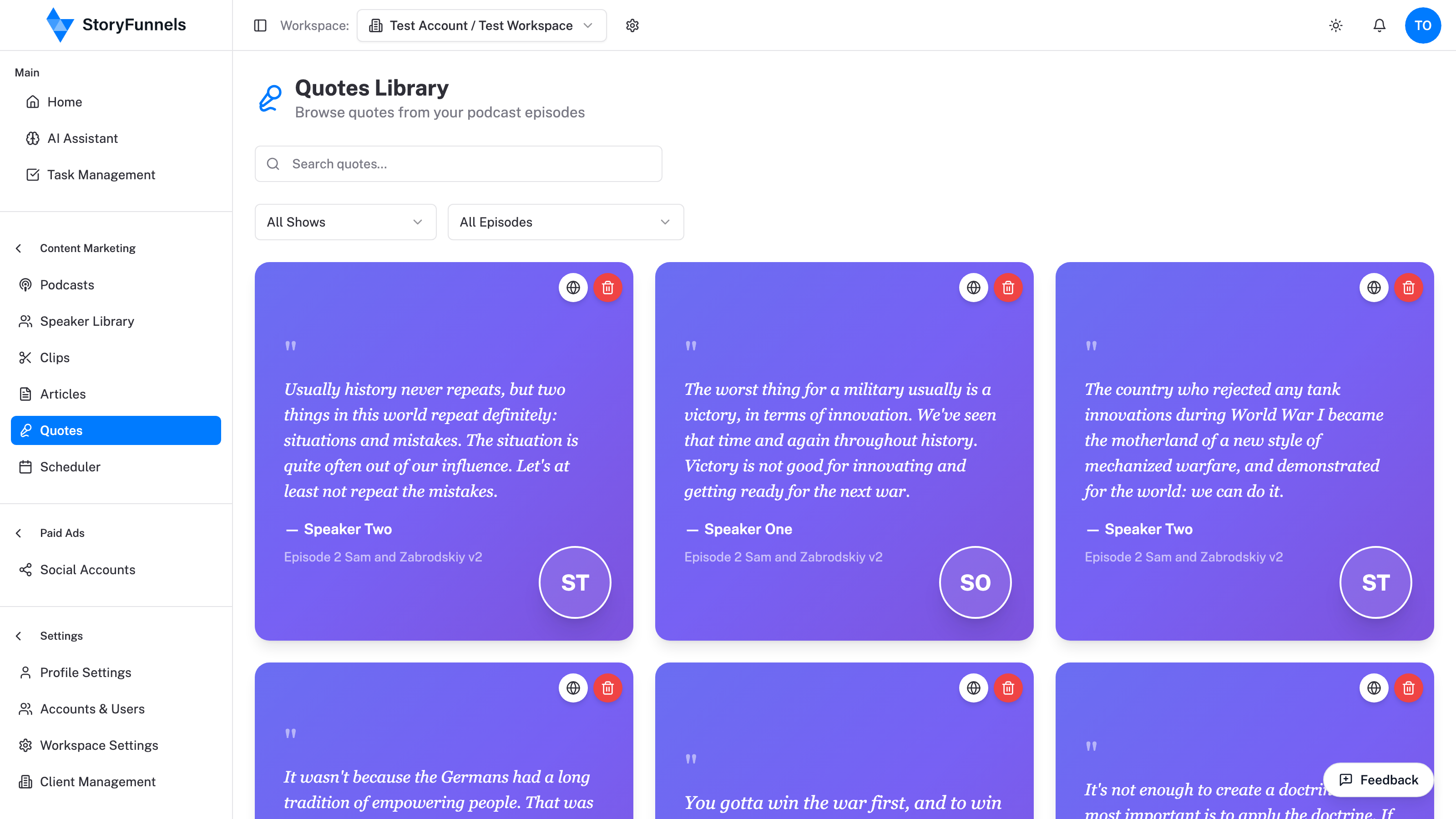
- A quote card or two — one striking line, set in type, for the feed and Stories.
- A carousel — the episode’s big idea broken into swipeable beats.
- Stories — behind-the-scenes plus the “listen now” link sticker.
That’s a full week from one recording. The recording was always the hard part. This is just unpacking it — the same logic as turning one episode into a month of content.
The posting flow that actually sends listeners
Reach and clicks are two different jobs. Most podcasters do the first and forget the second.
The Reel wins reach. The bio link turns that reach into an actual listen — don’t skip it.
One quirk worth obeying: don’t bury a raw link in your feed caption. It won’t be clickable and tends to drag your reach down. Put the listen link in your bio, then point to it — “link in bio,” a Stories sticker, a pinned comment. Reach gets them interested; the bio link gets them in their ears.
Cross-post to Facebook — same clip, second room
Make the clip once. Then stop leaving the second-biggest room empty.
A vertical Reel cross-posts straight to Facebook, where a different — often older, often warmer — audience is waiting. You don’t remake anything; you tailor the caption’s tone and let the same asset work twice. Facebook also tends to reward shares and saves, so a clip that sparks a “sending this to you” moment can travel differently there than it does on Instagram.
Captions, hashtags, and the comments
The video earns the stop. The words around it earn the follow.
Write a caption that adds something — context, a hot take, a question that begs a reply — rather than restating the clip. Use a small, relevant set of hashtags, not a wall of them. And treat the comments as the actual event: reply to people, ask follow-ups, pin the best one. The algorithm reads conversation as proof the post is worth showing to more people, and the humans read your replies as a reason to stick around.
What to post before you have great clips
Early on, your clips won’t be great. Post anyway — and lean on the formats that don’t need a viral moment.
Quote cards carry a single sharp line and ask nothing of your editing skills. Carousels let you teach one idea across a few slides, which the feed rewards because people swipe. Behind the scenes in Stories — the setup, the guest arriving, the blooper — builds the parasocial warmth that turns a viewer into a listener. None of it requires a perfectly cut Reel. All of it keeps you present while your clip craft catches up.
The mistake is waiting until everything’s polished. Presence compounds; perfection just delays the start.
Use Stories as the bridge to a listen
Reels win strangers. Stories convert the people who already follow you.
Stories are where you can be human and direct in a way the feed punishes — a quick “new episode’s up, here’s the one line that’ll make you click,” with a link sticker straight to the show. They’re also where you can ask: a poll, a question box, a “which guest should I get next?” Every reply is a tiny relationship, and the algorithm notices when people interact. Use Stories for the asks the polished feed can’t make.
Borrow other people’s audiences
The fastest growth rarely comes from your own followers. It comes from someone else’s.
Tag and thank your guest so the clip surfaces to their audience too. Use the collab feature so a post lives on both accounts at once. Reply thoughtfully on bigger creators’ posts in your niche, where their followers will actually see you. None of this is a growth hack — it’s just showing up in rooms you don’t own, which is where new listeners actually are.
Measure the one number that matters
It’s easy to drown in vanity metrics. Most don’t matter. One does.
Reach tells you the clip worked as a clip. But the number that ties social to your show is profile and link taps — people curious enough to leave the scroll and go toward you. A clip with modest views but strong taps is doing its real job. A clip with huge views and no taps was entertainment, not promotion. Optimize for the tap, and reach takes care of itself.
Consistency beats virality
You will not go viral on schedule. Nobody does.
What you can do is show up — a few clips a week, every week, each one a small invitation. Most podcasts quit social long before it compounds, which is exactly why the ones that keep going pull ahead. The clips that seem to “suddenly” blow up are almost always sitting on a hundred that didn’t. Keep feeding the machine; this is the same discipline that separates a growing show from a forgotten one.
Sources: Meta’s Instagram and Facebook creator guidance on Reels and cross-posting.